Η heat pump sizing It does not start with the building’s floor area or the rated output of the old boiler. It starts with the design heat losses: the power required by the building to maintain the desired indoor room temperatures under the design outdoor conditions. This forms the basis for selecting the unit, terminals, hydraulic system and backup strategy.
Η Alphatech heat pump range It includes solutions for new buildings or refurbishments, featuring underfloor heating, fan coils and radiator systems. However, the correct model is determined following a project study, not before it.
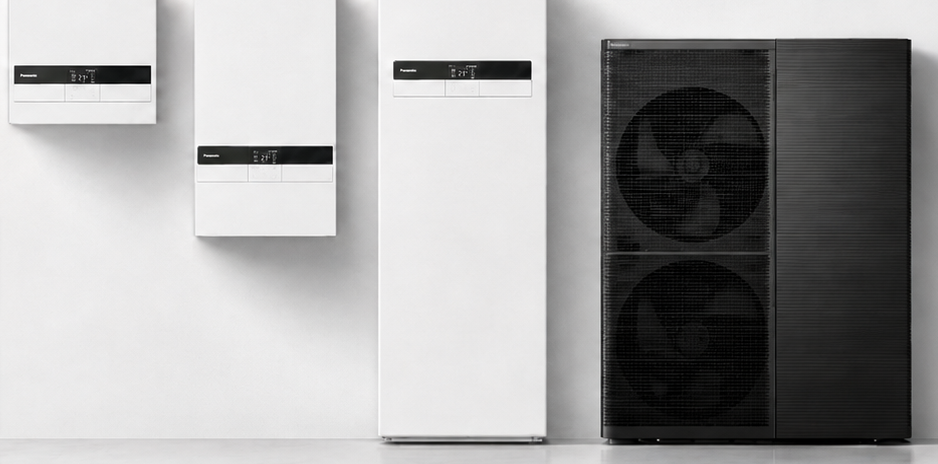
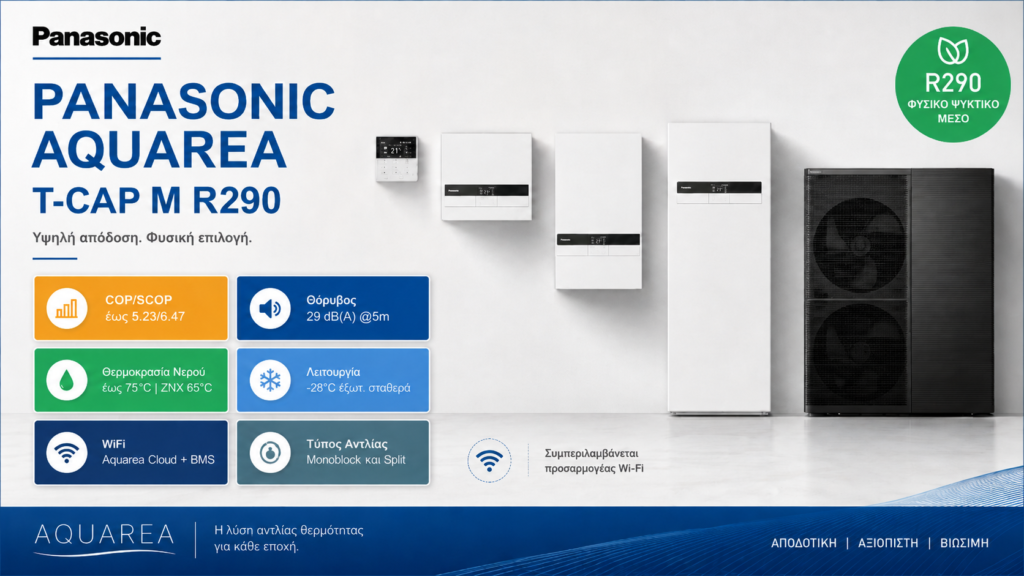
Panasonic Aquarea T-CAP M R290: an air-to-water heat pump using the natural refrigerant R290, available in monoblock and split configurations.
What are heat losses?
Heat losses include heat transfer through the building envelope, such as walls, the roof, floors, windows and thermal bridges, as well as losses due to ventilation or air infiltration. The EN 12831-1 methodology is used throughout Europe to calculate the design heating load per room and for the building as a whole.
The calculation does not simply give a total in kW. It shows which areas have the highest load, whether the terminals can cope with it at the available water temperature, and which zones require a different approach.
Why square metres and the old boiler aren’t enough
Method | Because it is insufficient on its own | What is needed instead of it |
kW per m² | Two buildings of the same floor area may have completely different levels of insulation, orientation and airtightness. | Calculation of heat losses using actual building envelope and climate data. |
Power rating of the old boiler | The boiler may have been oversized, or it may have been designed to provide DHW and heating using different operating principles. | Inspection of the space load, DHW and operation of the existing system. |
Maximum power output of the model | The rated power refers to specific conditions and is not the same for every external temperature or water supply temperature. | Performance curves for the selected model under design conditions. |
The correct order of selection
1. Survey of the building
Record the building’s geometry, structural elements, thermal insulation, window and door frames, orientation, use of spaces and desired indoor temperatures. When renovating, check what is actually there and do not rely solely on old floor plans.
2. Calculation by room
Calculating on a room-by-room basis helps to ensure that underfloor heating circuits, fan coils or radiators are correctly sized. This avoids the common pitfall: sufficient capacity for the whole house but inadequate performance in a north-facing or corner room.
3. Inspection of terminal units
The pump does not simply «take into account» the building’s kW rating. It must supply water at the temperature required by the terminals. Underfloor heating and correctly selected fan coils allow for low water temperatures. For existing radiators, check their output at the lowest temperatures you wish to use.
4. Model selection under real-world conditions
Compare the rated output of the model under consideration at various outdoor air temperatures with the corresponding water supply temperatures. Do not base your choice solely on the model’s rating, as this usually relates to a specific operating point.
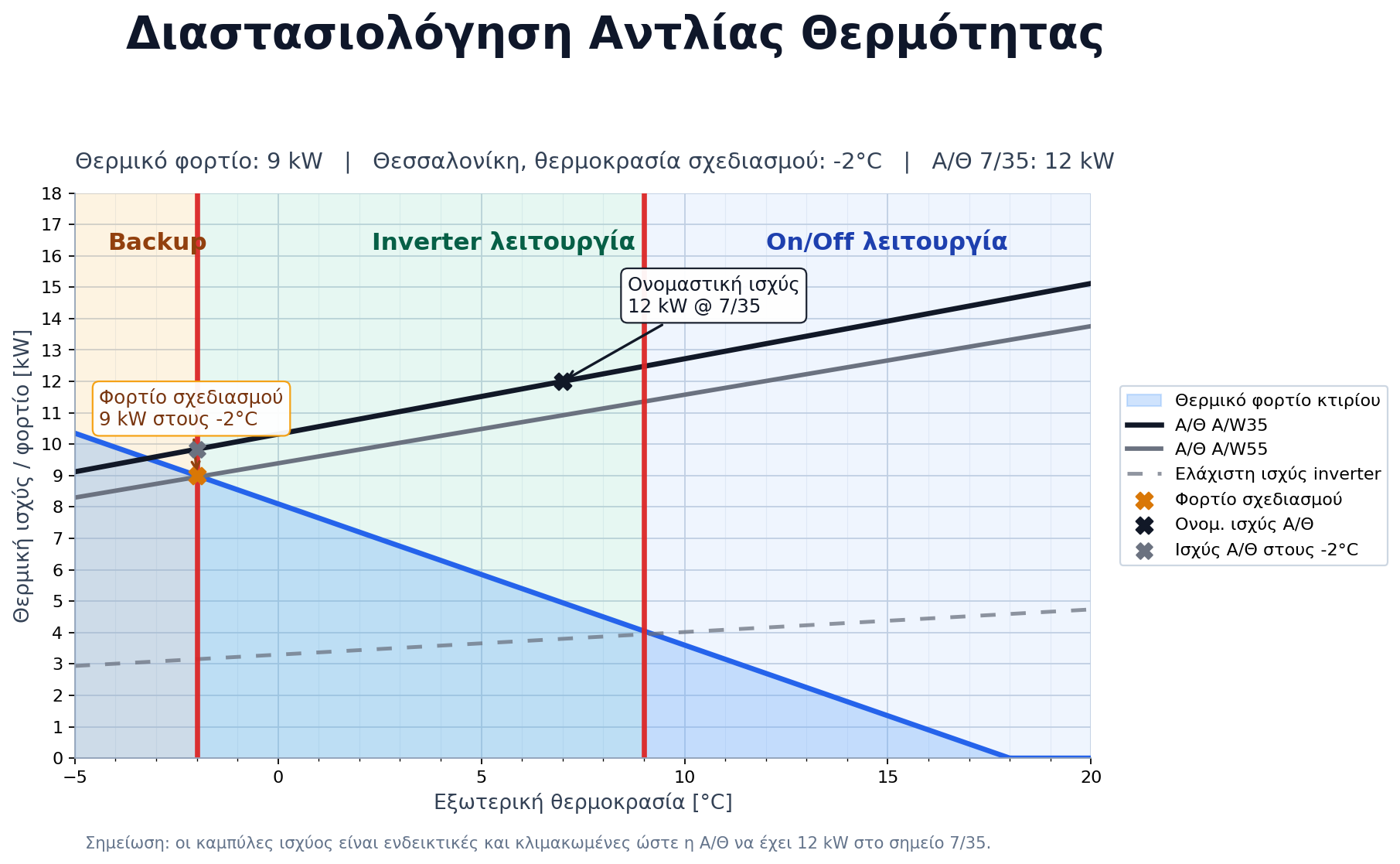
Selection example: 9 kW heat load at -2°C (Thessaloniki) and a 12 kW heat pump at point 7/35. The power curves are for illustrative purposes only.
5. ZNH, reserves and operational strategy
DHW production, potential electrical resistance, operation with a backup boiler and the required comfort level must be determined in the operating diagram. We do not arbitrarily add kW to the space load without understanding how the system will operate under different scenarios.
What do ‘over-dimensioning’ and ‘under-dimensioning’ mean?
An oversized pump may start and stop frequently when the load is low. This makes control difficult and may place a strain on the compressor’s operation. An undersized pump may fail to maintain indoor conditions on adverse days or may require regular support from a heater. Both situations are technically and economically undesirable.
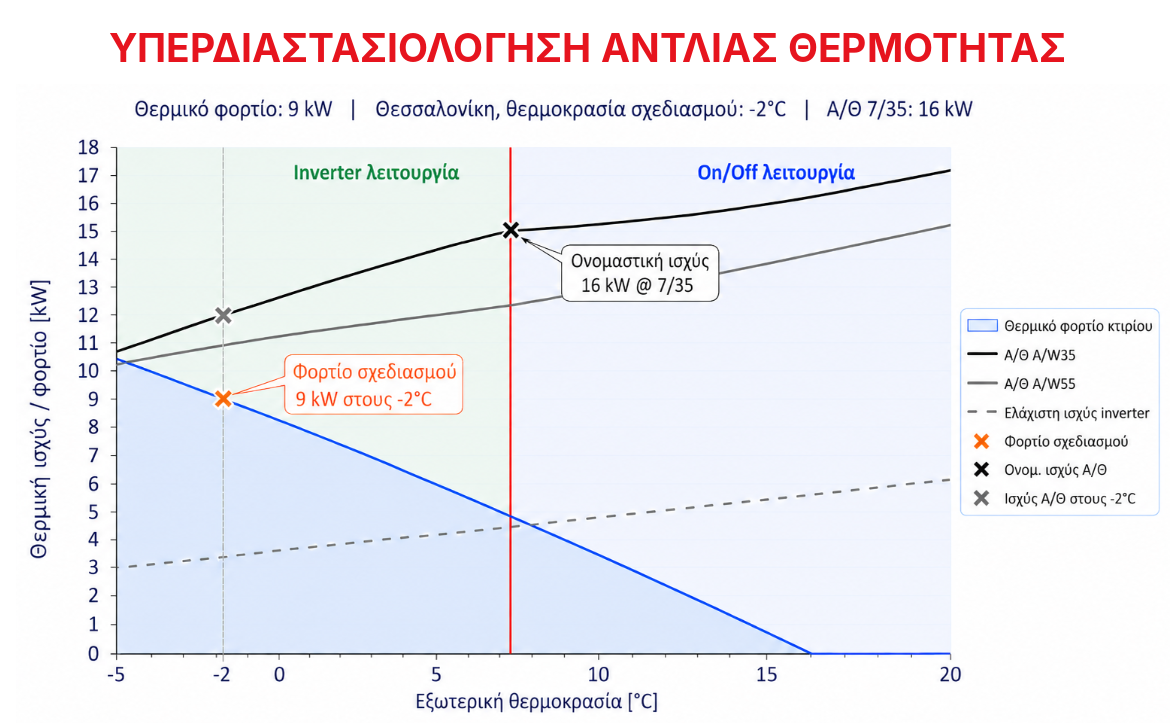
Over-sizing: for the same 9 kW load, a 16 kW pump at point 7/35 switches to On/Off mode earlier at mild temperatures. The power curves are indicative.
The solution is not simply a matter of ensuring a «safety margin» in terms of power. It is the informed choice of a model based on performance curves, the design load and the actual use of the building.
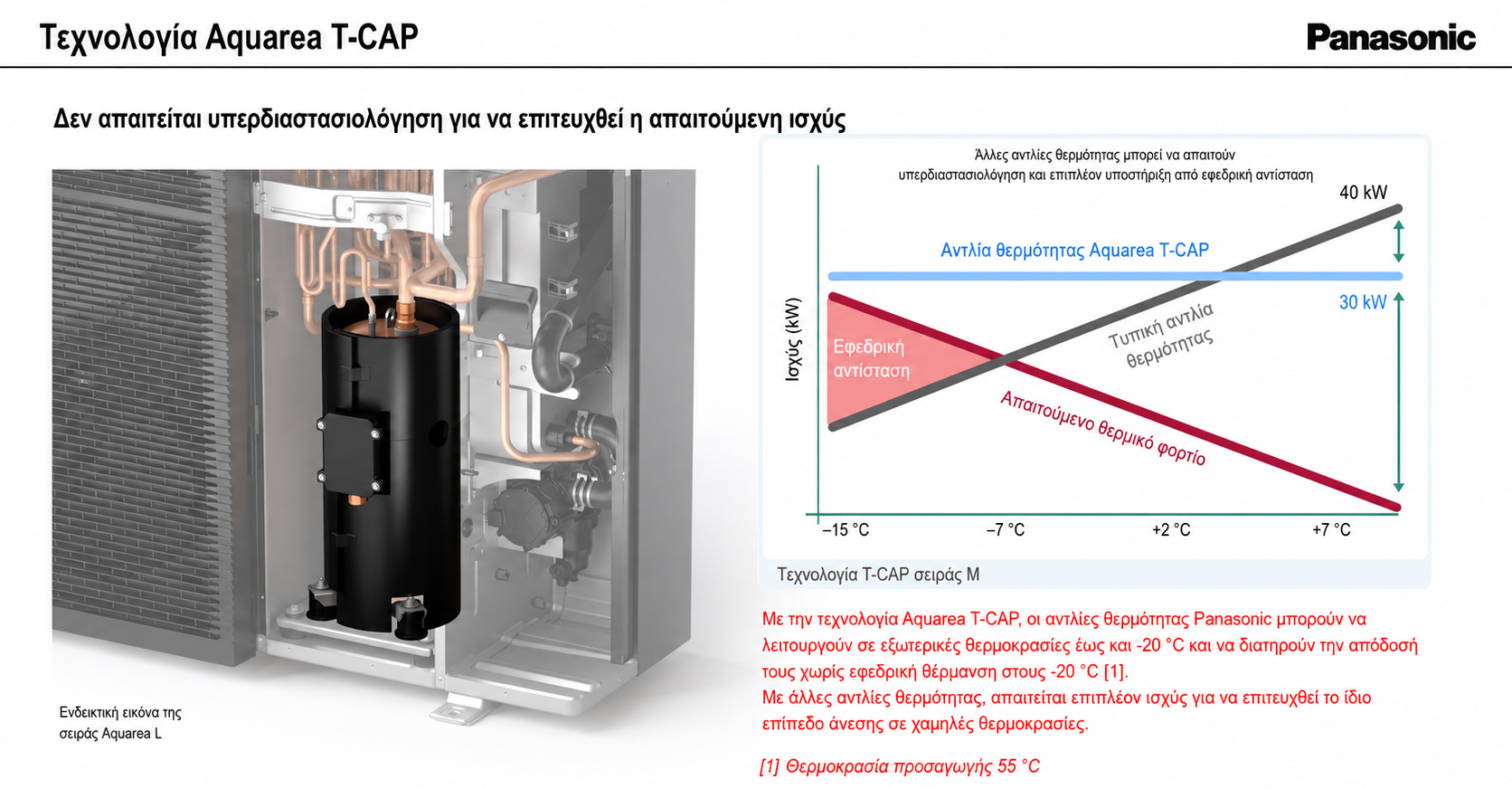
Aquarea T-CAP technology: comparison of performance with a standard heat pump at low outdoor temperatures. Source: Panasonic.
Plumbing system: part of the sizing process
The kW rating must be selected taking into account flow rates, pressure drop, manifolds, filters and zone control. Please also read the Alphatech guide on When is a buffer tank required?. A buffer is not a substitute for incorrect sizing or an inadequate hydraulic design.
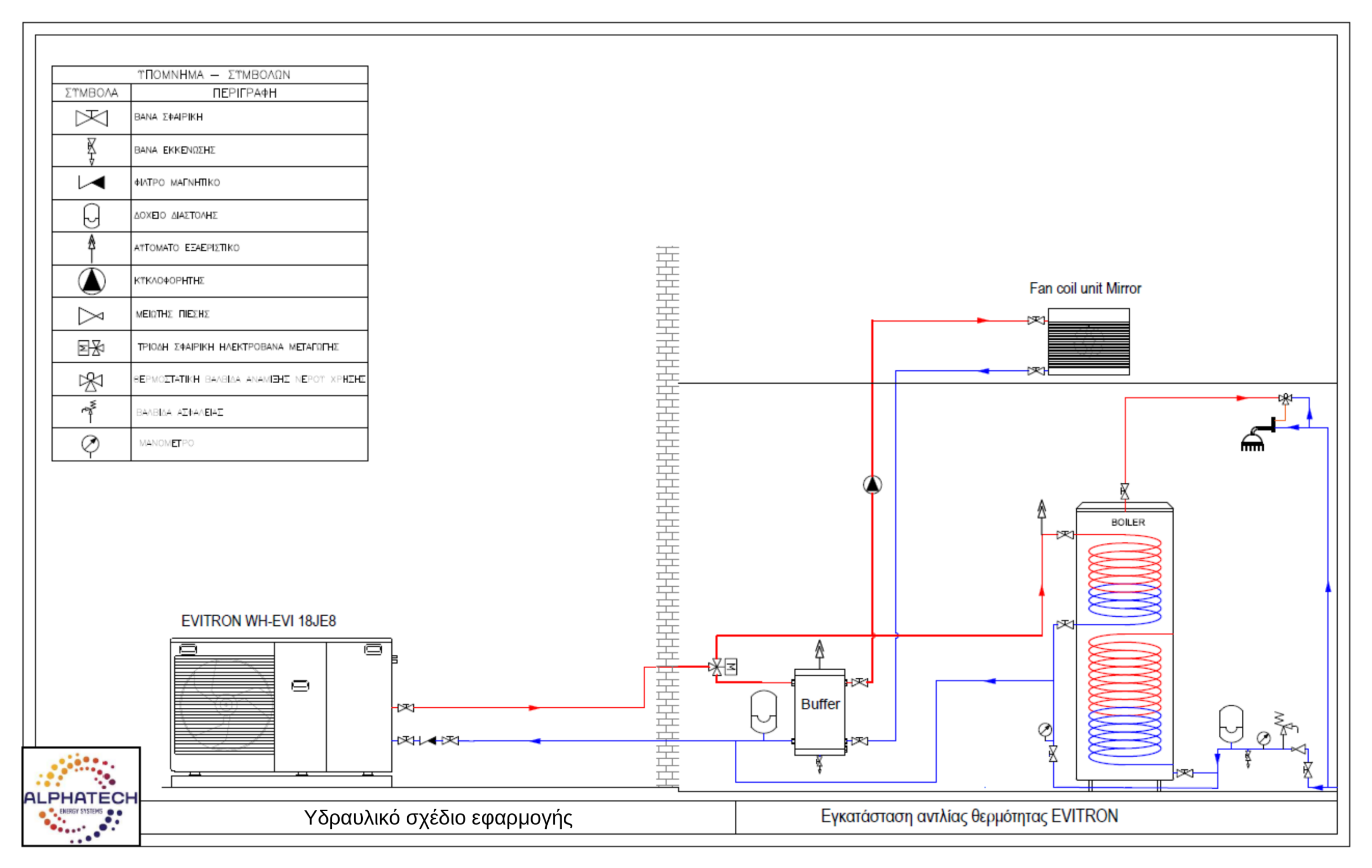
Hydraulic installation diagram from an Alphatech project: heat pump, buffer tank, MIRROR fan coil unit and DHW boiler.
A small, practical project chart
Stadium | Audit question | Deliverable |
Shell | What are the losses per area?; | Calculation of the thermal load per room. |
Terminals | Which ones can meet the load at the required supply level? Which ones can be installed?; | Choice of underfloor heating, fan coils, radiators or a combination of these. |
Pump | How does it perform in the various design aspects?; | Selecting a model using a technical data sheet. |
Plumbing | Is there sufficient supply and is the balance correct?; | Wiring diagram and settings. |
Commissioning | How is functionality verified after installation?; | Measurements of supply, return, water flow and compensation curve. |
Sizing a heat pump is a design process, not simply a matter of choosing from a catalogue. Measure the heat losses, check the terminals against the actual water temperatures, compare the model against the design conditions and organise the hydraulic circuit. This ensures that the pump can operate stably, efficiently and with a proven level of comfort.